.png)
5 Key Elements to Working with Youth Athletes
- Lexie Milford
- Sep 22, 2022
- 3 min read
Updated: Sep 4, 2025
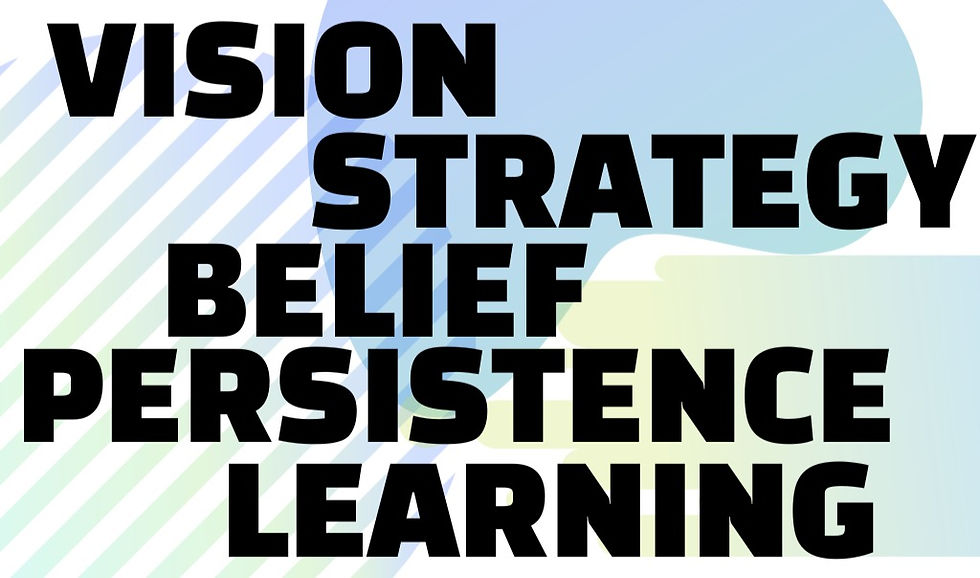
1. Vision — Helping Youth Understand What They Really Want
Research shows that people who have a clear sense of what they want not only achieve more, but they are also psychologically and physically healthier than those with ambiguous or conflicting goals. We ask our youth what they want and why they want to get fit. For young clients, answering this may be more difficult. It often will center on more short-term and specific goals, such as performance improvements at a sport or activity.

2. Strategy — Helping Youth Turn Lofty Ambitions into Consistent Action
Individuals who are successful often have a strategy that leads to their success. We try to help clients craft strategies and near-term goals that align with their priorities and values. This will help make their vision a reality. It is important to reassess these priorities and values, as they may change over time.
The most important principles of setting goals with youth include those that are:
Specific and challenging. Specific, challenging goals result in better performance than easy goals, no goals, or simply trying to “do your best”.
Time-bound and near-term. Supplementing a long-term vision with near-term goals enhances performance, confidence, determination, and happiness.
3. Belief — Helping Youth Believe
Self-confidence and self-efficacy are both extremely important in youth due to pressures by peers, parents, and others. Finding ways to improve these two characteristics will help young clients believe in their abilities so they can move forward and succeed. Belief in oneself and motivation are two of the strongest predictors of ability to change. We try to help young clients move toward an internal locus of control. This focuses on an individual’s ability to change and influence their own lifestyles and behaviors.

Visualization and mental practice can reduce anxiety, build confidence, and enhance performance for world- class and everyday athletes alike. To do it right:
Envision means, rather than ends. Envisioning outcomes like “being fit” may be pleasant, but clients benefit more from visualizing the means to those ends.
Practice, then visualize. Visualizing poor form or technique can actually hurt. performance. (That’s why visualization helps elite athletes, but can hamper novices)
Distribute, rather than bunch. It’s better to visualize a little bit every day, versus everything at once.
Draw From Success. Evidence shows that drawing from previous experiences of success in other activities can increase self-efficacy.
4. Persistence — Helping Youth Move Forward and Rebound from Setbacks
Research shows that people who are successful are persistent. They work hard and rebound from setbacks. Encouraging and developing the characteristic of persistence may take some time. We work with our youth to have realistic expectations and reward them when expectations are met. We keep the vision and goals in mind, and remind of role models who show persistence through difficult circumstances.

Those with social support achieve more, live longer, feel happier, and are more persistent than others. We encourage clients to ask friends and family to support their workout efforts, and help them find workout partners. We try to help fight boredom by varying a client’s routine to maximize physical benefits and motivation, particularly for our younger clients.
5. Learning — Helping Youth Make “Course Corrections”
We help youth persist in the right direction or determine whether course corrections are necessary. To help this process, we encourage our clients use self-monitoring. This means recording aspects of behavior and measuring progress toward goals. Self-monitoring enhances performance and aids in making lifestyle changes. Below are four ways we promote self-monitoring:
Use what’s available. Create charts and graphs based on the information from the workouts.
Take the extra steps. We encourage clients to record daily progress toward all of their goals on a 0 to 10 scale. This will enhance progress toward fitness goals, healthy eating, and personal/professional development.
Analyze data. Analyzing progress data helps ascertain which goals we are progressing toward and which goals require new strategies or additional effort.
Capture experiences. We love journaling for our young clients! Although recording progress toward goals provides benefits, research shows that journaling daily experiences can also enhance psychological and physical health. Journaling can help youth achieve more, clarify their goals, and navigate the challenges of adolescence.
We are constantly inspired by the youth we work with and aim to provide the best possible experiences for them to achieve their goals.
Source: NASM Youth Fitness Manual


Comments